
Meta Shifts Focus to AI, Leaving the Metaverse Vision Behind
Meta shifts focus from metaverse to AI, signaling a major strategic pivot as VR adoption slows and AI demand rises.
 Coinccino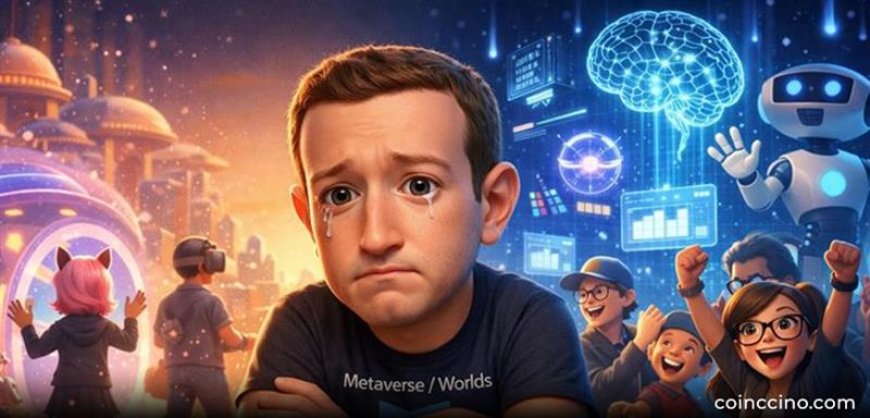
Meta is making a decisive strategic pivot, shifting its focus from the metaverse to artificial intelligence (AI) — a move that signals changing priorities inside one of the world’s biggest tech companies.
Once heavily invested in virtual reality through its Horizon Worlds project, Meta is now reallocating resources toward AI development, raising questions about the future of its metaverse ambitions.
What’s Happening?
Meta is gradually stepping back from its VR-heavy strategy and doubling down on AI.
Key highlights include:
• Reduced emphasis on metaverse and virtual reality projects
• Increased investment in AI infrastructure and development
• Internal restructuring to prioritize AI-driven products
• Shift in narrative from immersive worlds to intelligent systems
This marks a clear transition in how Meta sees the future of digital interaction.
Why Meta Is Pivoting to AI
The decision reflects both market trends and internal challenges.
Key reasons include:
• Slower-than-expected adoption of VR and metaverse platforms
• High costs associated with building immersive virtual ecosystems
• Rapid global momentum and competition in AI technologies
• Greater monetization opportunities in AI compared to VR
In short, AI offers faster returns and broader real-world applications.
What Happens to the Metaverse Vision?
Meta isn’t abandoning the metaverse entirely — but it’s no longer the priority.
Key developments include:
• Horizon Worlds facing declining user engagement
• Reduced visibility of metaverse in Meta’s core strategy
• VR projects continuing but with less aggressive investment
• Shift toward integrating AI into existing platforms
The metaverse is moving from center stage to a supporting role.
Bigger Picture: Industry-Wide Shift Toward AI
Meta’s move reflects a broader trend across the tech industry.
Key factors include:
• Tech giants racing to dominate the AI space
• Increased demand for AI tools in business and consumer apps
• Slower-than-expected mainstream adoption of VR
• Capital flowing toward AI innovation over immersive tech
This shift is reshaping where the next wave of innovation will come from.
Risks and Strategic Trade-Offs
While AI offers opportunities, the pivot comes with trade-offs.
Potential challenges include:
• Loss of long-term positioning in the metaverse space
• Heavy competition from companies like OpenAI, Google, and Microsoft
• Balancing legacy VR investments with new AI priorities
• Managing public perception after years of metaverse promotion
Meta is betting big — but the outcome isn’t guaranteed.
What to Watch Next
As Meta evolves its strategy, several key developments will be important.
Key things to watch:
• New AI product launches and integrations
• Updates on Horizon Worlds and VR ecosystem
• Investment patterns in AI vs metaverse
• Competitive positioning against other AI leaders
These signals will reveal how deep this pivot really goes.
Final Take
Meta’s shift from the metaverse to AI marks a significant turning point. What once defined the company’s future vision is now taking a back seat to a technology with faster adoption and clearer monetization paths.
For the broader tech landscape, the message is clear: AI is no longer just a trend — it’s the main battlefield.