Bitcoin Miners Face New AI Rival in Elon Musk
Bitcoin miners expanding into AI infrastructure now face growing competition from Elon Musk’s SpaceX and major technology firms chasing AI compute power.
 Coinccino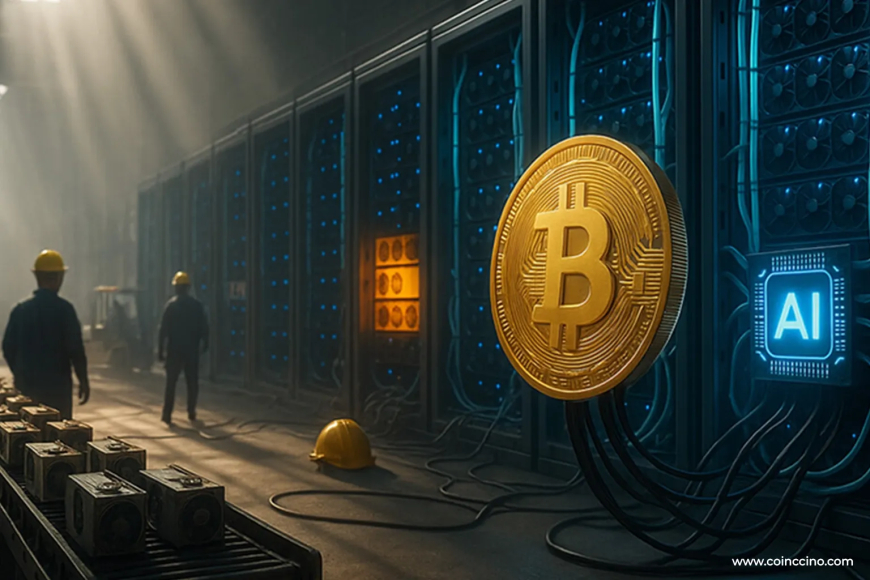
The Bitcoin mining industry’s push into artificial intelligence infrastructure has entered a new phase as Elon Musk and SpaceX emerge as powerful new competitors in the race for AI compute dominance.
For months, Bitcoin miners have increasingly repositioned themselves as AI infrastructure providers, betting that access to large-scale electricity and data-center capacity could become more valuable than mining Bitcoin itself. Now, Musk’s latest AI expansion strategy is threatening to reshape that market entirely.
SpaceX Turns AI Infrastructure Into a Business
SpaceX recently signed a major agreement with Anthropic, the creator of Claude AI, granting the company access to the full computing power of SpaceX’s massive Colossus 1 AI cluster located in Memphis, Tennessee.
The facility reportedly provides:
- More than 220,000 Nvidia processors
- Approximately 300 megawatts of power capacity
The scale of the deployment instantly positions SpaceX among the largest AI infrastructure operators globally.
The deal reportedly allowed Anthropic to:
- Double Claude Code rate limits
- Remove peak-hour restrictions
- Increase AI developer request volumes significantly
While the agreement strengthens SpaceX’s AI ambitions, it also places the company directly into a market Bitcoin miners were hoping to dominate.
Bitcoin Miners Shift Toward AI Infrastructure
The Bitcoin mining sector has spent the past two years searching for alternatives to increasingly difficult mining economics.
Following the 2024 Bitcoin halving:
- Mining rewards were reduced
- Hash prices dropped sharply
- Operating margins tightened across the industry
According to research from CoinShares:
- Q4 2025 became one of the hardest periods for miners since the halving
- Hashprice reportedly fell near five-year lows
- Many operators struggled with rising power and equipment costs
As a result, major mining companies began transitioning into:
- AI compute hosting
- GPU colocation
- High-performance computing (HPC)
- Data-center infrastructure services
AI Revenue Is Becoming More Important Than Bitcoin Mining
CoinShares estimates that listed Bitcoin miners could generate:
- Up to 70% of revenue from AI operations by the end of 2026
That figure is a dramatic increase from roughly:
- 30% AI-related revenue today
Public mining firms have already announced:
- More than $70 billion in GPU colocation and AI cloud agreements
The shift is changing the identity of the entire sector.
Companies such as:
- Core Scientific
- TeraWulf
- Hut 8
- Cipher Mining
…are increasingly operating more like data-center and AI infrastructure firms than traditional Bitcoin miners.
Why Electricity Has Become the Most Valuable Asset
The AI boom has created a new global bottleneck:
electricity.
Modern AI systems require:
- Massive energy supplies
- Industrial-scale cooling
- High-density computing environments
- Fast grid connections
Industry analysts now argue that access to electricity may become more valuable than access to AI chips themselves.
Research from Artemis suggests:
- The US could face a 50-gigawatt data-center power deficit by 2028
At the same time:
- Hyperscaler AI spending could approach $650 billion annually
This shortage is precisely why Bitcoin miners initially appeared well-positioned for the AI transition.
Many mining companies already control:
- Large power contracts
- Industrial land
- Grid infrastructure
- High-energy operational sites
In many cases, miners secured these assets years before the AI infrastructure boom began.
The AI Infrastructure Race Is Becoming Crowded
However, Musk’s entry changes the competitive landscape significantly.
Unlike Bitcoin miners, SpaceX operates within a much larger ecosystem involving:
- Artificial intelligence
- Space infrastructure
- Satellite communications
- Advanced computing systems
This allows Musk-linked companies to:
- Build AI clusters for internal use
- Lease excess capacity commercially
- Scale infrastructure rapidly using enormous capital resources
That creates a different level of competition compared to independent mining firms.
Bitcoin Miners Face a Capital Problem
While miners may possess valuable power infrastructure, transforming mining facilities into advanced AI data centers is expensive and technically challenging.
AI-focused facilities require:
- Advanced cooling systems
- Enterprise networking infrastructure
- GPU-optimized architecture
- Specialized chip deployment
Many miners lack the balance sheet strength of:
- Major hyperscalers
- Big tech firms
- Infrastructure funds
- AI-native cloud providers
As a result, miners now face pressure from much larger competitors entering the same market.
The Valuation Gap Is Growing
Investor behavior already reflects this transition.
CoinShares reported:
- AI-exposed miners trade at significantly higher valuation multiples than pure Bitcoin miners
Mining firms with secured AI and HPC contracts reportedly trade at:
- Around 12.3x enterprise value-to-sales multiples
Meanwhile, traditional miners remain closer to:
- Approximately 5.9x multiples
The market is increasingly rewarding companies based on:
- Power access
- AI partnerships
- Infrastructure scalability
- Compute monetization potential
…rather than Bitcoin production alone.
Musk’s Colossus Expands the Competitive Threat
SpaceX’s Colossus AI infrastructure may represent a major strategic turning point.
Reports suggest:
- SpaceX already shifted some AI training workloads to Colossus 2
- Colossus 1 capacity is now being commercialized externally
This allows SpaceX to monetize existing infrastructure while continuing to expand internally.
Meanwhile, Anthropic reportedly expressed interest in:
- Multi-gigawatt orbital data centers powered by solar energy in space
If realized, such projects could radically expand future AI computing capacity and reduce dependence on terrestrial power limitations.
Bitcoin Miners Are No Longer Competing Only With Each Other
The AI pivot initially seemed like a lifeline for struggling miners.
Now, however, Bitcoin miners are competing against:
- Big tech companies
- Hyperscalers
- AI-native cloud providers
- Infrastructure funds
- Energy developers
- Elon Musk-linked AI platforms
This transforms the AI infrastructure opportunity from a niche diversification strategy into a full-scale global infrastructure war.
The Future of Bitcoin Mining May Depend on Power Access
Despite rising competition, miners still retain one critical advantage:
existing access to power.
Grid interconnection delays across the United States can stretch:
- Four years or longer
Large-scale substations and transformers often require:
- Two to three years to deploy
This means mining firms with operational power infrastructure still possess highly valuable assets in the AI economy.
The challenge now is whether they can move quickly enough before technology giants dominate the sector entirely.
Conclusion
Bitcoin miners are rapidly transforming into AI infrastructure companies as mining profitability declines and global demand for compute power explodes. However, Elon Musk’s SpaceX and other major technology players are now entering the same market with deeper capital pools, larger ecosystems, and massive AI ambitions.
The battle is increasingly centered around electricity, data centers, and compute infrastructure rather than Bitcoin alone. In the coming years, the winners may not simply be the best Bitcoin miners—but the companies best positioned to control the future of AI power infrastructure.
FAQs
1. Why are Bitcoin miners moving into AI infrastructure?
Declining mining profitability after Bitcoin halvings pushed miners to seek revenue from AI data centers and GPU hosting.
2. What is SpaceX’s Colossus AI cluster?
Colossus is a massive AI computing facility with over 220,000 Nvidia processors and large-scale power capacity.
3. Why is electricity important for AI infrastructure?
AI systems require enormous energy supplies, cooling systems, and high-density computing environments.
4. Which Bitcoin mining companies are expanding into AI?
Companies including Core Scientific, TeraWulf, Hut 8, and Cipher Mining are expanding into AI infrastructure services.
5. How does Elon Musk impact the AI infrastructure market?
Musk’s SpaceX introduces powerful competition with large-scale AI compute resources and major financial backing.
6. Could AI become more profitable than Bitcoin mining?
Many analysts believe AI infrastructure and GPU hosting could eventually generate more stable revenue than mining Bitcoin.
Disclaimer:
This content is for informational purposes only and not financial advice. Always conduct your own research before making investment decisions.
MORE NEWS