
LSEG Eyes 24-Hour Trading: Is London Finally Catching Up to the Crypto Era?
LSEG explores 24-hour trading as retail demand and crypto market influence push traditional exchanges toward round-the-clock access.
 Coinccino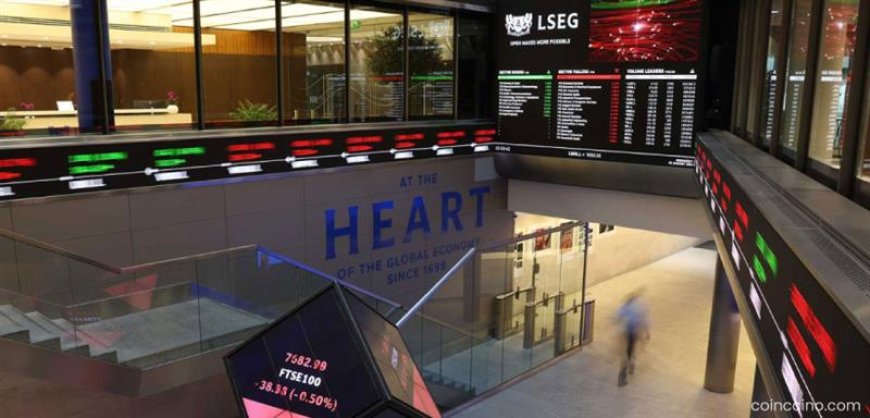
The London Stock Exchange Group (LSEG) is exploring the possibility of 24-hour trading, signaling a major shift in how traditional markets operate. Driven by rising retail participation and the influence of always-on crypto markets, the move could redefine how global investors access equities.
For a market long tied to fixed trading hours, this isn’t just an upgrade — it’s a response to changing expectations in a world that now trades around the clock.
What’s Happening Behind the Shift?
LSEG’s move comes as trading behavior evolves rapidly, especially among retail and international investors.
Key highlights include:
• Surge in retail trading outside traditional 8 AM–4:30 PM GMT hours
• Growing influence of 24/7 crypto markets on investor expectations
• U.S. exchanges like NYSE, Nasdaq, and Cboe exploring similar models
• Internal reviews on settlement, compliance, and trading volume distribution
This isn’t just experimentation — it’s a serious rethink of how modern markets should function.
Opportunities and Risks of 24-Hour Trading
While the idea sounds promising, it comes with both advantages and challenges.
Potential benefits include:
• Greater global accessibility for investors in Asia and the Middle East
• More continuous price discovery and smoother market reactions
• Increased competitiveness with U.S. and digital asset markets
• Stronger positioning of LSEG as a fintech-forward exchange
Potential challenges include:
• Lower liquidity during off-peak hours
• Institutional reluctance to trade outside core sessions
• Increased operational complexity and costs
• Risk of higher volatility in thinner markets
The opportunity is clear — but execution will be everything.
Market Sentiment: A Push Toward Modernization
The idea of round-the-clock trading is gaining traction, especially among newer market participants.
Key sentiment drivers include:
• Rising demand from mobile-first and global investors
• Frustration with limited access during fixed hours
• Influence of crypto’s always-open market structure
• Pressure on traditional exchanges to innovate
There’s a growing sense that traditional markets can no longer afford to stay static.
Bigger Picture: Traditional Finance Meets Crypto Influence
LSEG’s exploration reflects a broader transformation happening across financial markets.
Key factors include:
• Crypto markets setting new standards for accessibility
• Increasing global participation in financial markets
• Need for real-time trading across time zones
• Evolution of exchanges into technology-driven platforms
The line between traditional finance and digital markets is slowly starting to blur.
Challenges That Could Shape the Outcome
Despite the momentum, there are still significant hurdles to overcome.
Potential challenges include:
• Regulatory approvals and compliance requirements
• Technical upgrades to support continuous trading
• Ensuring sufficient liquidity across all hours
• Balancing innovation with investor protection
A rushed rollout could create more problems than it solves — making careful planning essential.
What to Watch Next
As discussions continue, market participants are keeping a close eye on what comes next.
Key things to watch:
• Official announcements from LSEG on extended hours
• Adoption trends among U.S. exchanges
• Regulatory responses in the UK and Europe
• Early pilot programs or phased rollouts
The next steps could determine whether this becomes a global standard or remains an experiment.
Final Take
LSEG’s move toward potential 24-hour trading reflects a deeper shift in global finance — one driven by retail participation, technology, and the influence of crypto markets. The expectations have changed, and traditional systems are being forced to adapt.
If executed well, this could revitalize London’s position in global markets. But success will depend on striking the right balance between innovation, liquidity, and regulation.